
The Japanese Sushi Experience: Tradition Meets Taste

Picture this: you find yourself in a bustling sushi restaurant, the air filled with the aroma of fresh seafood and the sounds of laughter and conversation. As you take a seat at the sushi bar, you can’t help but notice the skill and precision of the sushi chefs behind the counter. Their hands move with grace and speed as they expertly craft each piece of sushi, paying careful attention to every detail.
It’s not just about the food, though. The Japanese sushi experience goes beyond the flavors and textures that tantalize your taste buds. It’s about honoring tradition and immersing yourself in a centuries-old practice that has been passed down through generations.
Before you dive headfirst into your sushi feast, it’s important to understand the etiquette that surrounds this culinary art. From how to use chopsticks correctly to the proper way to apply soy sauce, these customs add a layer of respect and appreciation to your dining experience. By adhering to these traditions, you not only show your respect for the sushi chefs but also enhance your own enjoyment of the meal.
So, whether you’re a seasoned sushi lover or new to the world of Japanese cuisine, prepare to embark on a journey that will awaken your senses, enlighten your taste buds, and leave you with a deep appreciation for the rich traditions and exquisite flavors of the Japanese sushi experience.
The Origins of Sushi: A Blend of Legends and History
The history of sushi is shrouded in legends and folklore, but its true origins can be traced back to ancient times. One story tells of an elderly woman who accidentally discovered the fermentation process when she hid her pots of rice in osprey nests. However, the concept of using fermented rice as a fish preservative can be found in a fourth-century Chinese dictionary. This process, known as pickling, is what gives sushi its unique flavor and helps to extend the shelf life of seafood. Over time, sushi evolved in Japan and became popular as a complete dish, with the combination of fermented rice and preserved fish known as nare-zushi.
Sushi Legends and Origins
The legends surrounding the origins of sushi have captured the imagination of sushi enthusiasts worldwide. The story of the elderly woman and her accidental discovery showcases the ingenuity and resourcefulness of early sushi makers. By fermenting rice and preserving fish, they found a way to make their seafood last longer and create a unique and delicious dish.
| Legend | Description |
|---|---|
| Hidden Rice | An elderly woman hid rice pots in osprey nests, leading to the accidental discovery of fermentation. |
| Pickling Process | The use of fermented rice as a fish preservative can be traced back to a fourth-century Chinese dictionary. |
| Nare-zushi | The combination of fermented rice and preserved fish gave rise to the popular dish known as nare-zushi. |
These legends, combined with the historical evidence of pickling practices, illustrate the origins of sushi and the role of fermentation in creating its distinctive taste. As sushi continued to evolve in Japan, new techniques and variations emerged, transforming it into the beloved culinary art form it is today.
The Evolution of Sushi: From Tradition to Innovation
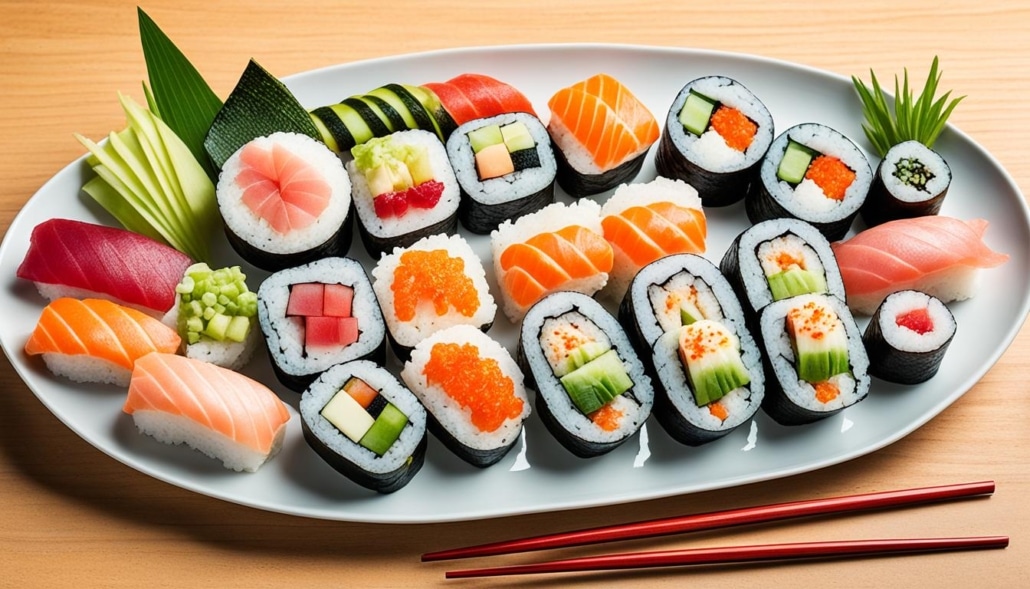
As Japan modernized and the demand for sushi grew, the preparation and serving methods evolved. In the 1820s, a man named Hanaya Yohei introduced nigiri sushi in Edo (now Tokyo). This style of sushi involved pressing a small ball of rice topped with a thin slice of fresh fish. This innovation allowed sushi to be made quickly, catering to the fast-paced lifestyle of Edo. Over time, sushi bars and restaurants spread throughout Japan and the rest of the world.
Along with this evolution, new ingredients and flavors were introduced, giving rise to modern sushi variations. Today, sushi has gone far beyond just raw fish and rice. Sushi chefs experiment with unique combinations of ingredients, incorporating elements from different cuisines to create innovative and exciting flavors. From fusion sushi rolls to vegetarian options, the world of modern sushi offers something for everyone.
Additionally, the concept of omotenashi, or Japanese hospitality, has become an integral part of the sushi dining experience. Sushi chefs strive to provide exceptional service and create a welcoming atmosphere for their guests. From the moment you step into a sushi restaurant, you are greeted with warm smiles and an attention to detail that ensures a memorable dining experience. The combination of traditional techniques and modern hospitality truly embodies the essence of omotenashi.
Conclusion
The Japanese sushi experience is a cultural journey that combines tradition, taste, and the concept of omotenashi, or Japanese hospitality. Throughout history, sushi has evolved from its humble beginnings as preserved fish and fermented rice to become a global culinary phenomenon. It has captured the hearts and palates of people all over the world, offering an authentic experience of Japanese cuisine.
When you indulge in Japanese sushi, you embark on a gastronomic adventure that not only satisfies your taste buds but also immerses you in centuries-old traditions. Every bite tells a story, a tale of meticulous craftsmanship and a dedication to preserving the essence of authentic Japanese flavors.
At the heart of the Japanese sushi experience lies the concept of omotenashi. Sushi chefs not only skillfully craft each delicate piece of nigiri or roll but also strive to provide an unforgettable dining experience for their guests. The attention to detail, the warmth, and the respect shown to diners are fundamental elements that elevate the sushi experience beyond just a meal.
Whether you are well-versed in Japanese cuisine or a newcomer seeking to explore the delights of sushi, embarking on this culinary adventure will undoubtedly leave you with a deep appreciation for the rich traditions that underpin the art of Japanese sushi. So venture forth and savor the exquisite flavors, embrace the hospitality, and immerse yourself in the timeless traditions that make the Japanese sushi experience truly one-of-a-kind.


Leave a Reply
Want to join the discussion?Feel free to contribute!