
Essential Gear for Every Food Photographer
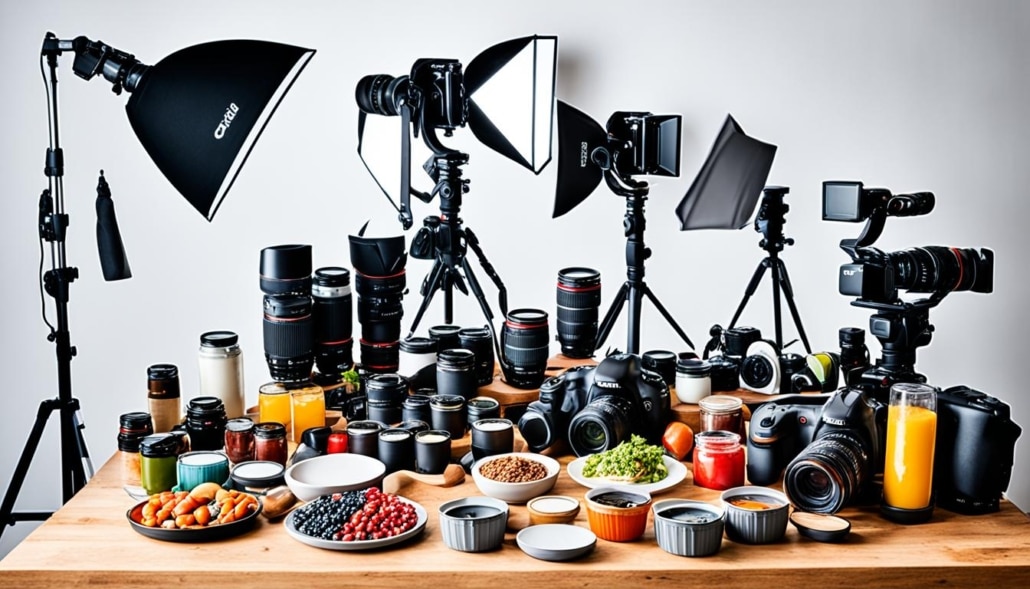
When it comes to capturing mouthwatering food shots and creating stunning culinary photography, having the right photography gear is essential. As professional photographers, we understand the importance of using the right equipment to bring out the flavors and textures in every dish we capture. Let us share a story that perfectly illustrates the significance of having the proper gear for your food photography adventures.
Imagine this: You are a passionate food lover who recently discovered your knack for capturing the beauty of food through your camera lens. Inspired by the mouthwatering food photography you see online, you decide to take your culinary photography skills to the next level. You can’t wait to create stunning visuals that bring out the best in every dish.
Excited and determined, you gather your ingredients and set up a mini studio in your kitchen. You start taking pictures with your smartphone, hopeful that it will capture the essence of the meal. However, as you review the shots, you notice something is missing. The images lack the sharpness, depth, and vibrancy you had hoped for. Your passion for food photography begins to dwindle, and you feel discouraged.
But then, you stumble upon an article that explains the significance of having the right food photography gear. Intrigued, you decide to invest in a second-hand DSLR camera, a Canon in this case, as it fits your budget. You also purchase a 50mm 1.8 lens, recommended for capturing stunning food shots.
As you set up your mini studio once again, this time armed with your new gear, you notice an immediate difference. The camera’s control over the settings allows you to experiment with aperture and shutter speed, creating images that are sharp, beautifully lit, and bursting with vibrant colors. You can’t help but feel a surge of excitement and pride as you capture the essence of each dish.
Equipped with the right gear, you start exploring different angles, lighting techniques, and compositions. As you gain confidence, the joy and passion for food photography that once seemed lost resurfaces. It’s as if your camera and lenses have unlocked a new world, allowing you to express your love for food through stunning visuals.
With every shot, your skills improve, and you find yourself mesmerized by the transformation your images undergo with the right gear. Food photography is no longer just a hobby; it has become a passion that consumes you in the best way possible.
So, whether you are a budding food photographer or an experienced professional looking to enhance your culinary photography skills, investing in the right professional equipment is a game-changer. In the upcoming sections of this article, we will dive deeper into the essential gear that every food photographer should have, from cameras and lenses to software and lighting equipment. Get ready to take your food photography to new heights!
Choosing the Right Camera and Lenses for Food Photography
When it comes to food photography, having the right equipment is essential to capture stunning images that showcase the beauty and details of your culinary creations. In this section, we’ll guide you through choosing the perfect camera and lenses for your food photography journey.
Choosing the Camera
Investing in a brand new, expensive camera is not necessary to get started with food photography. A second-hand DSLR camera from renowned brands like Canon, Sony, or Nikon will serve your needs perfectly. Whether you opt for a cropped sensor or a full-frame camera, the key is to have control over your settings to capture mouthwatering food shots.
If you’re just starting out and on a budget, a second-hand camera will provide excellent image quality and functionality without breaking the bank. Popular models like the Canon EOS 700D, Nikon D5300, or Sony A6000 are great options to consider. These cameras offer impressive features and image quality that will elevate your food photography.
Choosing the Lenses
While the kit lens that often comes with entry-level DSLRs, typically the 18-55mm, is sufficient for general photography, upgrading your lenses can significantly enhance the quality of your food photos.
For optimal results, consider investing in a prime lens—a lens with a fixed focal length—for capturing those delectable details. A 50mm 1.8 lens is a fantastic choice for full-frame cameras, while a 35mm 1.8 lens is ideal for cropped sensor cameras.
The wider aperture of these lenses allows for better control over depth of field, enabling you to achieve that beautiful background blur and draw attention to the main subject of your food composition. They are also great for low-light conditions, ensuring your images remain sharp and well-lit even in challenging lighting situations.
Both the 50mm 1.8 lens and the 35mm 1.8 lens offer exceptional image quality and versatility. They can be used on both cropped sensor and full-frame cameras, making them excellent long-term investments for your food photography journey.
In the next section, we’ll explore other essential equipment that will take your food photography to the next level. From editing software to lighting accessories, we’ll cover all the tools you’ll need to create captivating food images.
Other Essential Food Photography Equipment
In addition to the camera and lenses, there are several other essential pieces of equipment that every food photographer should have in their toolkit.
Editing Software: Post-processing is a crucial step in food photography, and having the right editing software can make all the difference. Lightroom CC, a popular choice among photographers, allows you to have full control over your post-processing, from adjusting exposure and white balance to enhancing colors and sharpening details.
Light Diffuser: Natural light is often the preferred choice for food photography, but it can sometimes be too harsh or create unwanted shadows. A diffuser is a handy tool that helps tame the light and create softer shadows, resulting in a more natural and pleasing appearance for your food shots.
Foam Boards and Photo Clamps: To enhance the depth and overall quality of your images, it’s important to have tools for reflecting and blocking light. White and black foam boards can be used to redirect and control the light source, while photo clamps are useful for fixing and standing up the foam boards, allowing you to keep your hands free for capturing the perfect shot.
Vinyl Backdrops: Adding depth and interest to your food story is essential, and vinyl backdrops with subtle colors and textures can help achieve that. These backdrops provide a versatile and easy way to enhance the visual appeal of your images, allowing you to create different moods and styles for your culinary creations.
Alongside these equipment, investing in external hard drives for backup storage and a sturdy tripod for stability are highly recommended for professional food photography.


Leave a Reply
Want to join the discussion?Feel free to contribute!