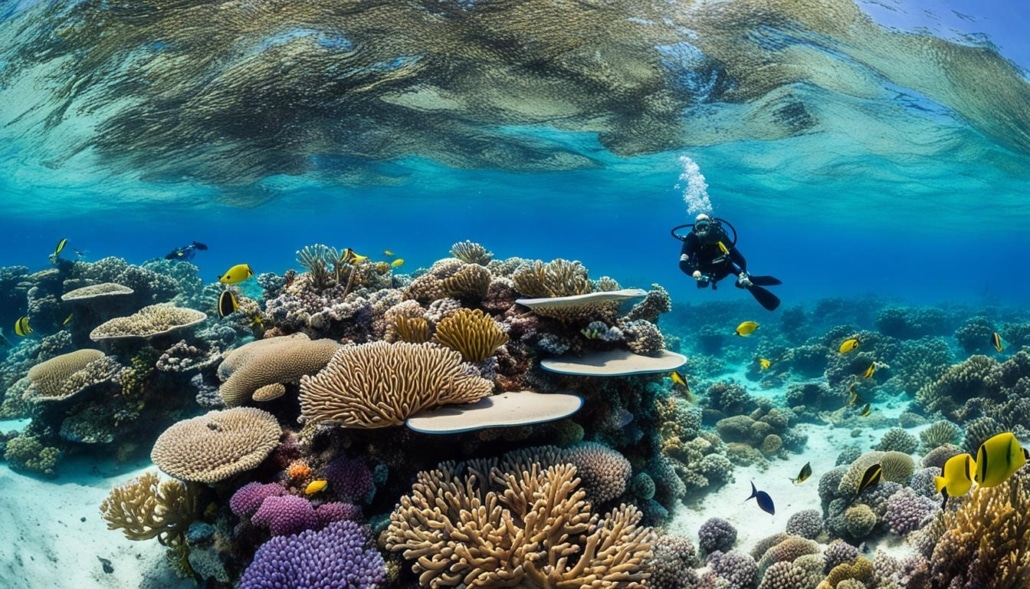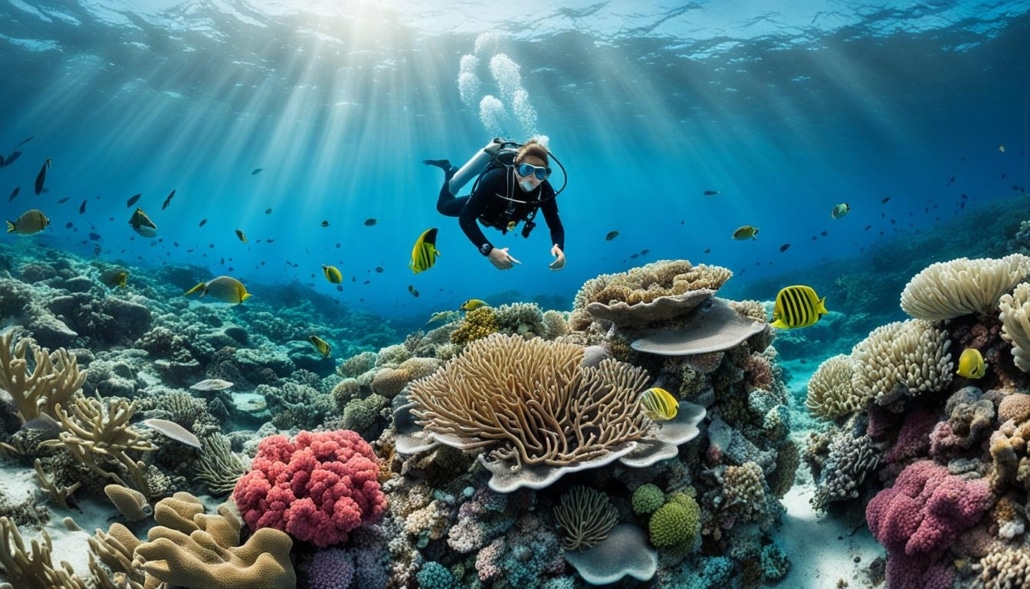
Snorkeling is a popular activity that allows people to explore the wonders of the ocean. While it can be a fun and exciting experience, it is important to practice responsible snorkeling to avoid harming the marine environment. Sustainable snorkeling involves following certain guidelines and practices, such as not touching marine organisms, behaving responsibly in the water, not feeding animals, and avoiding the use of single-use plastics.
Friend of the Sea has developed a certification standard for tour operators that offer sustainable snorkeling activities, which includes training programs for operators and crew and the collection of scientific data.
Key Takeaways:
- Eco tourism and snorkeling should go hand in hand with responsible practices to protect the marine environment.
- Following guidelines such as not touching marine organisms and avoiding single-use plastics is essential for sustainable snorkeling.
- Friend of the Sea offers a certification standard for tour operators to promote sustainable snorkeling activities.
- Practicing responsible snorkeling helps preserve the fragile marine ecosystems for future generations.
- Supporting tour operators that prioritize ocean conservation contributes to sustainable tourism.
Why Responsible Snorkeling Matters
Responsible snorkeling plays a crucial role in the preservation of coral reefs and marine life. Coral reefs are not only breathtaking ecosystems but also provide a habitat for a quarter of all marine life and sustain the livelihoods of over half a billion people, ensuring food security and income. To protect these fragile ecosystems, it is essential to practice sustainable snorkeling and adopt responsible behaviors.
Maintaining proper buoyancy control is one of the key sustainable practices in snorkeling. It helps to prevent accidental damage to coral reefs caused by contact with fins or unintentional kicking. By mastering buoyancy control, snorkelers ensure that they do not harm the delicate structures of the reefs they explore.
Furthermore, respecting marine life by not touching or collecting organisms is another crucial aspect of responsible snorkeling. Coral reefs support a diverse range of marine species, from colorful fish to majestic sea turtles and fascinating invertebrates. By refraining from disturbing or removing these organisms, we can protect their habitats and contribute to the overall health and sustainability of marine ecosystems.
Choosing eco-friendly dive and snorkel operators that prioritize sustainable practices is also of great significance. Supporting businesses that adhere to environmentally friendly approaches and responsible tourism can make a substantial impact on preserving our oceans. These operators often implement sustainable practices, such as promoting education and awareness, using renewable energy sources, and minimizing waste and pollution.
Responsible snorkeling not only allows us to explore the wonders of the underwater world but also ensures that future generations can continue to enjoy these breathtaking ecosystems.
By engaging in responsible snorkeling practices, we become stewards of our marine environments and contribute to the wellbeing of coral reefs and marine life. The table below highlights the key reasons why responsible snorkeling matters:
| Benefits of Responsible Snorkeling | Contributions to Eco Tourism |
|---|---|
| Preserves coral reefs and their biodiversity | Sustainable practices to protect delicate ecosystems |
| Maintains the balance of marine ecosystems | Supports a responsible and ethical tourism industry |
| Ensures future generations can experience marine wonders | Promotes awareness and respect for marine life |
| Conserves natural resources and habitats | Generates economic benefits for local communities |
Responsible snorkeling is not only an enjoyable experience but also a way to actively contribute to the preservation of our oceans. By embracing sustainable practices and choosing eco-friendly operators, we can protect coral reefs, support marine life, and promote a healthy and sustainable future for our seas.
Tips for Eco-Friendly Snorkeling
When it comes to snorkeling, practicing eco-friendly techniques can help protect the delicate marine ecosystems and minimize the environmental impact of our activities. By following these tips, you can become a responsible snorkeler and contribute to sustainable practices in the industry.
1. Practice Good Buoyancy Control
Proper buoyancy control is crucial to prevent accidental damage to coral reefs. By maintaining neutral buoyancy and avoiding contact with the reef, you can minimize the risk of breaking or damaging corals and disturbing marine life.
2. Use Reef-Safe Sunscreen
Traditional sunscreens often contain harmful chemicals that can wash off into the water, damaging coral reefs and marine life. Opt for reef-safe sunscreen brands that are free from oxybenzone and octinoxate, which have been proven to harm coral reefs.
3. Avoid Single-Use Plastics
Single-use plastics, such as water bottles and plastic bags, pose a significant threat to marine life when they end up in the ocean. Bring your reusable water bottle and cloth bag to minimize plastic waste and its impact on the marine environment.
4. Choose Responsible Tour Operators
Support tour operators that prioritize sustainable practices and actively contribute to marine and national park conservation efforts. Look for certifications like Friend of the Sea, which ensure that operators follow guidelines and training programs to minimize their environmental impact.
5. Respect Marine Life
Remember that marine life should be observed from a distance, and touching or feeding animals can be harmful to their well-being. Admire the underwater world without interfering with the natural behaviors of marine creatures.
“Protecting the marine environment is a collective responsibility. By adopting eco-friendly practices, we can ensure the preservation of our precious oceans and the awe-inspiring beauty they hold.” – [Your Name]
Following these tips will not only allow you to enjoy the breathtaking beauty of marine ecosystems but also contribute to their preservation for future generations to come. By snorkeling responsibly and embracing sustainable practices, we can become stewards of the sea and make a positive impact on the environment.
The Impact of Snorkel Tourism on Coral Reefs
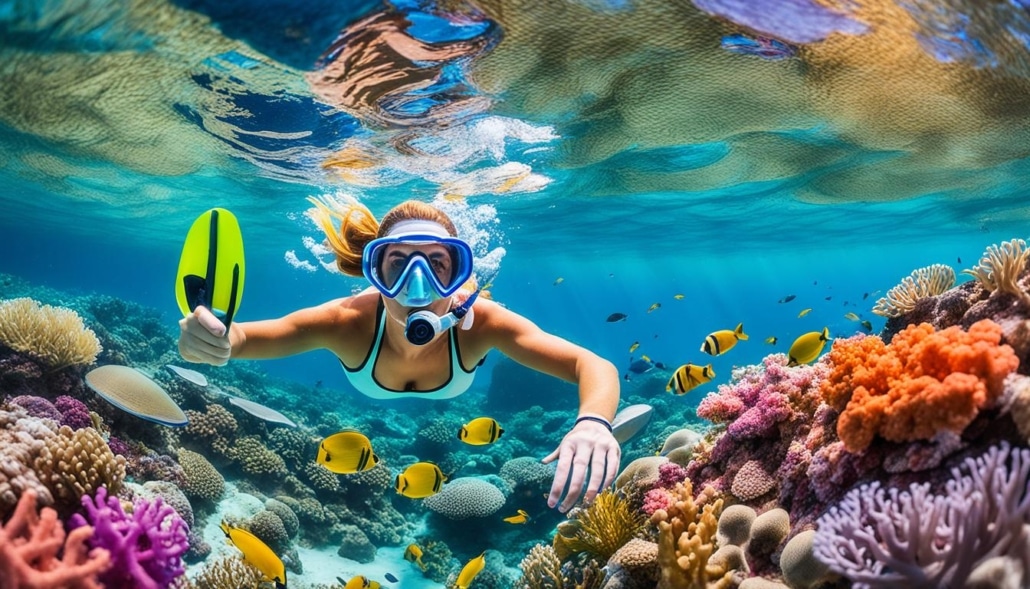
Snorkeling tourism plays a dual role in the conservation of coral reefs. On one hand, it brings economic benefits to local communities and allows people to experience the beauty of the ocean firsthand. On the other hand, irresponsible behavior by snorkelers can pose a significant threat to the health and sustainability of coral reefs. Activities such as climbing over corals, kicking them, or breaking them can cause irreversible damage, disrupting the delicate balance of these underwater ecosystems.
It is essential for snorkelers to recognize their responsibility in protecting coral reefs and to adopt sustainable snorkeling practices. By following guidelines like not touching or stepping on corals, maintaining proper buoyancy control, and refraining from collecting marine life, we can minimize our environmental impact and ensure the long-term preservation of these fragile habitats.
“The health of our coral reefs depends on responsible tourism and the adoption of sustainable snorkeling practices.”
| Positive Impacts of Snorkel Tourism on Coral Reefs | Negative Impacts of Snorkel Tourism on Coral Reefs |
|---|---|
|
|
Considering the delicate nature of coral reefs and their vital role in supporting marine biodiversity, it is crucial for all snorkelers to prioritize the protection and preservation of these ecosystems. By diving responsibly and making conscious choices, we can ensure that future generations can continue to explore and appreciate the wonders of coral reefs in all their natural beauty.
References:
– Coral Reef Conservation Program. (n.d.). Retrieved from https://coralreef.noaa.gov/
– Snorkeling Sustainable Guidelines. (n.d.). Retrieved from https://www.coralrestoration.org/snorkeling
The Role of Green Fins in Sustainable Snorkeling
Green Fins is an initiative led by the United Nations Environment Programme and The Reef-World Foundation that plays a crucial role in promoting eco-friendly diving and snorkeling tourism around the world. This innovative program works closely with dive and snorkel operators, providing them with the necessary training and resources to minimize the impact on coral reefs and marine ecosystems.
The Green Fins initiative is based on a comprehensive code of conduct that emphasizes sustainable practices for snorkelers and divers. By adhering to this code, operators can significantly reduce the pressures on fragile coral reefs, ensuring their long-term sustainability for future generations.
One of the core principles of the Green Fins approach is the use of mooring buoys instead of anchoring. This helps prevent damage to coral reefs caused by dragging anchor chains. By properly mooring their boats, tour operators can minimize direct physical contact between boats and delicate coral formations, preserving the natural beauty of the underwater environment.
The initiative also stresses the importance of adopting no-touch policies during snorkeling and diving activities. Encouraging snorkelers to resist the temptation to touch or interact with marine life not only protects the organisms themselves but also allows them to carry out their natural behavior undisturbed. This contributes to the overall health and sustainability of marine ecosystems.
Maintaining good buoyancy control is another key element of the Green Fins approach. Snorkelers and divers are encouraged to practice buoyancy skills to avoid accidentally damaging coral reefs or kicking up sediment that can smother the corals. By staying properly buoyant and keeping their distance from the reef, snorkelers can safeguard the delicate balance of the underwater environment.
The Green Fins initiative goes beyond simply providing guidelines and codes of conduct. It also offers training programs and resources to tour operators, empowering them to become leaders in sustainable tourism. By supporting this initiative, snorkelers can choose operators who have made a genuine commitment to reducing their environmental impact and protecting coral reefs.
Green Fins is helping to create a global network of dive and snorkel operators who are dedicated to sustainable practices. By choosing Green Fins certified operators, snorkelers can make a positive impact on marine ecosystems and contribute to the preservation of the underwater world for future generations.
Green Fins is an example of how eco tourism and sustainable practices can go hand in hand. Through collaborative efforts and responsible choices, snorkeling enthusiasts can enjoy their favorite activity while protecting the natural wonders that draw them to the ocean.
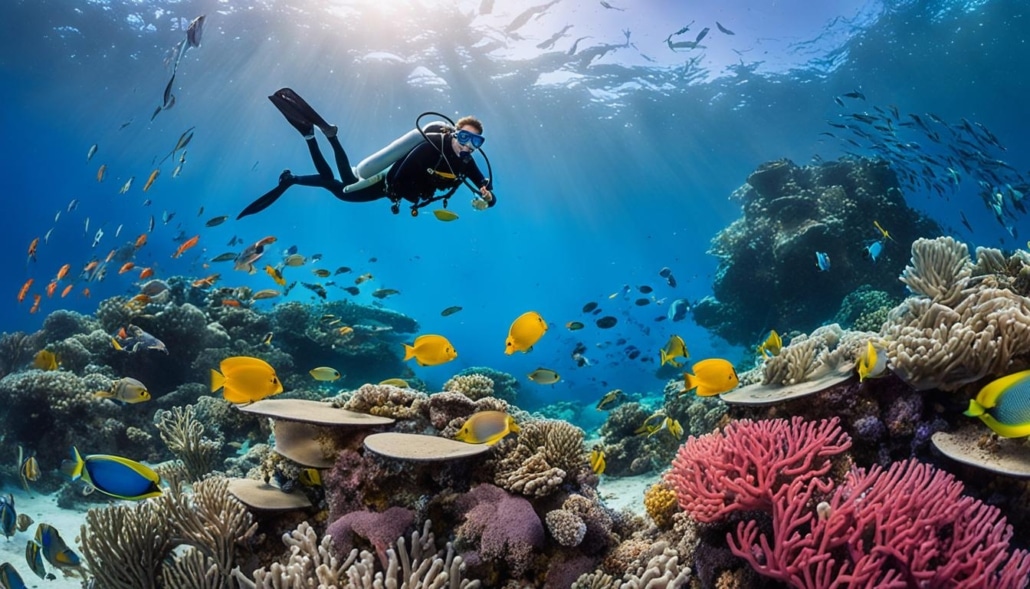
Image of snorkelers practicing sustainable snorkeling guided by Green Fins principles.
The Expansion of Green Fins to Egypt
Green Fins, an initiative dedicated to promoting sustainable tourism, has recently expanded its efforts to Egypt, a renowned destination for diving and snorkeling enthusiasts. With its stunning coral reefs and diverse marine life, Egypt offers a unique opportunity for eco-conscious travelers to explore the beauty of the underwater world while advocating for its protection.
The fundamental goal behind Green Fins’ expansion to Egypt is to enhance sustainability within the marine tourism sector. By collaborating with dive and snorkel operators, Green Fins aims to implement eco-friendly practices that minimize the environmental impact of these activities and preserve the delicate balance of marine ecosystems.
Leading the way in this initiative is the Chamber of Diving and Watersports in Egypt, an esteemed organization dedicated to promoting responsible tourism practices. By adopting the Green Fins code of conduct, the chamber sets the standard for sustainable snorkeling and diving in Egypt, encouraging operators to follow environmentally friendly guidelines while providing exceptional experiences for visitors.
Several dive and snorkel operators have already joined the Green Fins network in Egypt, demonstrating their commitment to sustainable tourism. Through their participation, these operators contribute to the protection of the Red Sea’s precious coral reefs and ensure the long-term viability of Egypt’s marine tourism industry.
The Benefits of Green Fins in Egypt
The expansion of Green Fins in Egypt brings numerous benefits to the country’s sustainable tourism efforts. By implementing the Green Fins code of conduct, dive and snorkel operators can:
- Minimize physical damage to coral reefs caused by anchoring and unintentional contact with marine life
- Promote responsible behavior among visitors, raising awareness about the fragility of marine ecosystems
- Contribute to scientific research and data collection to aid in the preservation of Egypt’s natural wonders
- Showcase Egypt as a model for sustainable tourism, attracting environmentally conscious travelers
The collaboration between Green Fins and Egypt’s dive and snorkel operators marks a significant step forward in the journey towards sustainable tourism in the region. It allows visitors to indulge in the breathtaking beauty of the Red Sea’s coral reefs while actively participating in their preservation. Through education, responsible practices, and ongoing conservation efforts, Egypt’s marine tourism industry can thrive in harmony with nature.
| Benefits of Green Fins in Egypt | Actions |
|---|---|
| Minimize physical damage to coral reefs caused by anchoring and unintentional contact with marine life | Implementation of mooring buoys and no-touch policies |
| Promote responsible behavior among visitors, raising awareness about the fragility of marine ecosystems | Education and provision of guidelines to visitors |
| Contribute to scientific research and data collection to aid in the preservation of Egypt’s natural wonders | Collaboration with research institutions and data sharing |
| Showcase Egypt as a model for sustainable tourism, attracting environmentally conscious travelers | Marketing and promotion of eco-friendly practices |
By working hand in hand with Green Fins, Egypt’s dive and snorkel operators are paving the way for sustainable tourism, preserving the stunning coral reefs that have captivated travelers for generations.
Challenges and Benefits of Sustainable Snorkeling
While adopting sustainable snorkeling practices is essential for the preservation of our oceans, it can also present challenges. Some customers may resist or struggle to understand the need for certain restrictions, such as not using gloves or pointing sticks. However, the benefits of sustainable snorkeling are numerous and far-reaching.
Benefits of Sustainable Snorkeling
Sustainable snorkeling not only protects coral reefs and marine life, but also offers several significant benefits:
- Preservation of Coral Reefs: By practicing sustainable snorkeling, we ensure the long-term survival of coral reefs, which are incredibly diverse ecosystems that support a wide range of marine life. Future generations can continue to enjoy these breathtaking ecosystems.
- Connection with the Underwater World: Sustainable snorkeling allows us to forge a deeper connection with the underwater world. By respecting marine habitats and wildlife, snorkelers can experience the beauty and wonder of the ocean without causing harm.
- Enhanced Awareness of Ocean Conservation: Engaging in sustainable snorkeling practices raises awareness about the importance of ocean conservation. Snorkelers become advocates for the protection of marine ecosystems and drive positive change.
Challenges of Sustainable Snorkeling
While the benefits are clear, there are challenges to overcome when promoting sustainable snorkeling:
- Resistance to Restrictions: Some customers may resist or struggle to understand the need for certain restrictions, such as not using gloves or pointing sticks. Educating snorkelers about the reasons behind these restrictions can help foster understanding and acceptance.
- Changing Consumer Behavior: Encouraging snorkelers to adopt sustainable practices requires a shift in consumer behavior. Overcoming ingrained habits and promoting eco-friendly alternatives may take time and effort.
- Industry Transformation: For sustainable snorkeling to become the norm, the entire industry must undergo a transformation. From tour operators to equipment manufacturers, everyone has a role to play in supporting sustainable practices.
“The benefits of sustainable snorkeling far outweigh the challenges. By protecting coral reefs and marine life, we contribute to the long-term health and vitality of our oceans.” – Marine Conservationist
In conclusion, while there may be challenges in promoting sustainable snorkeling practices, the benefits are significant. By protecting coral reefs, fostering a deeper connection with the underwater world, and raising awareness about ocean conservation, sustainable snorkeling allows us to enjoy the wonders of the ocean responsibly. With collective efforts, we can ensure that future generations have the privilege of exploring these incredible ecosystems. Let us embrace eco tourism and snorkel with a purpose.
Conclusion
Embracing eco tourism and practicing responsible snorkeling is crucial for the preservation of marine ecosystems. By following sustainable practices, such as avoiding damage to coral reefs, choosing eco-friendly operators, and spreading awareness about the importance of ocean conservation, we can actively contribute to the protection of our oceans.
Sustainable snorkeling allows us to explore the wonders of the underwater world while ensuring that these natural treasures remain intact for future generations to enjoy. Let us all be responsible stewards of the sea and embrace eco tourism with a purpose.
By incorporating sustainable practices into our snorkeling adventures, we can help minimize our impact on the marine environment and support the conservation of these fragile ecosystems. Together, we can make a positive difference in ocean conservation and ensure that the beauty and biodiversity of our oceans are preserved for years to come.
So, the next time you embark on a snorkeling trip, remember to choose eco-friendly tour operators, respect marine life, and promote sustainable practices. Together, we can protect our oceans and create a future where snorkeling and eco tourism can coexist harmoniously with nature.
FAQ
What is sustainable snorkeling?
Sustainable snorkeling involves following certain guidelines and practices to minimize harm to the marine environment. This includes not touching marine organisms, behaving responsibly in the water, not feeding animals, and avoiding the use of single-use plastics.
Why is responsible snorkeling important for coral reefs and marine life?
Coral reefs are vital ecosystems that support a quarter of all marine life and provide food security and livelihoods for half a billion people. By practicing responsible snorkeling, such as not damaging coral reefs and not touching or collecting marine life, we can help protect these fragile ecosystems.
What tips can help me become an eco-friendly snorkeler?
To become an eco-friendly snorkeler, practice good buoyancy control to prevent accidental damage to coral reefs. Use reef-safe sunscreen and avoid single-use plastics to reduce your environmental impact. Choose tour operators that support marine and national park conservation efforts.
What are the positive and negative impacts of snorkeling tourism on coral reefs?
Snorkeling tourism provides income to local communities and allows people to appreciate the ocean. However, irresponsible behavior by snorkelers, such as damaging the corals, can threaten the health of coral reefs.
What is the role of Green Fins in sustainable snorkeling?
Green Fins is an initiative led by the United Nations Environment Programme and The Reef-World Foundation to promote sustainable diving and snorkeling tourism. It works with operators to reduce pressures on coral reefs, providing training and resources based on a code of conduct.
How is Green Fins expanding its efforts to Egypt?
Green Fins is working with dive and snorkel operators in Egypt to implement sustainable practices and protect the Red Sea’s coral reefs. The Chamber of Diving and Watersports in Egypt has adopted the Green Fins code of conduct, and several operators have joined the network.
What are the challenges and benefits of sustainable snorkeling?
While adopting sustainable snorkeling practices can present challenges, such as resistance from some customers, the benefits are numerous. By protecting coral reefs and marine life, we ensure future generations can enjoy these ecosystems, fostering a deeper connection with the underwater world and raising awareness about ocean conservation.
Why should I embrace eco tourism and practice responsible snorkeling?
Embracing eco tourism and practicing responsible snorkeling is crucial for the preservation of marine ecosystems. By following sustainable practices, such as avoiding damage to coral reefs and choosing eco-friendly operators, we actively contribute to the protection of our oceans and ensure their preservation for future generations.
Source Links
- https://www.seaparadise.com/how-eco-friendly-diving-and-snorkeling-can-help-save-our-oceans/
- https://friendofthesea.org/marine-conservation-projects-and-awareness/sustainable-snorkeling/
- https://www.unep.org/news-and-stories/story/environmentally-friendly-diving-conserve-marine-life-sustainable-development